

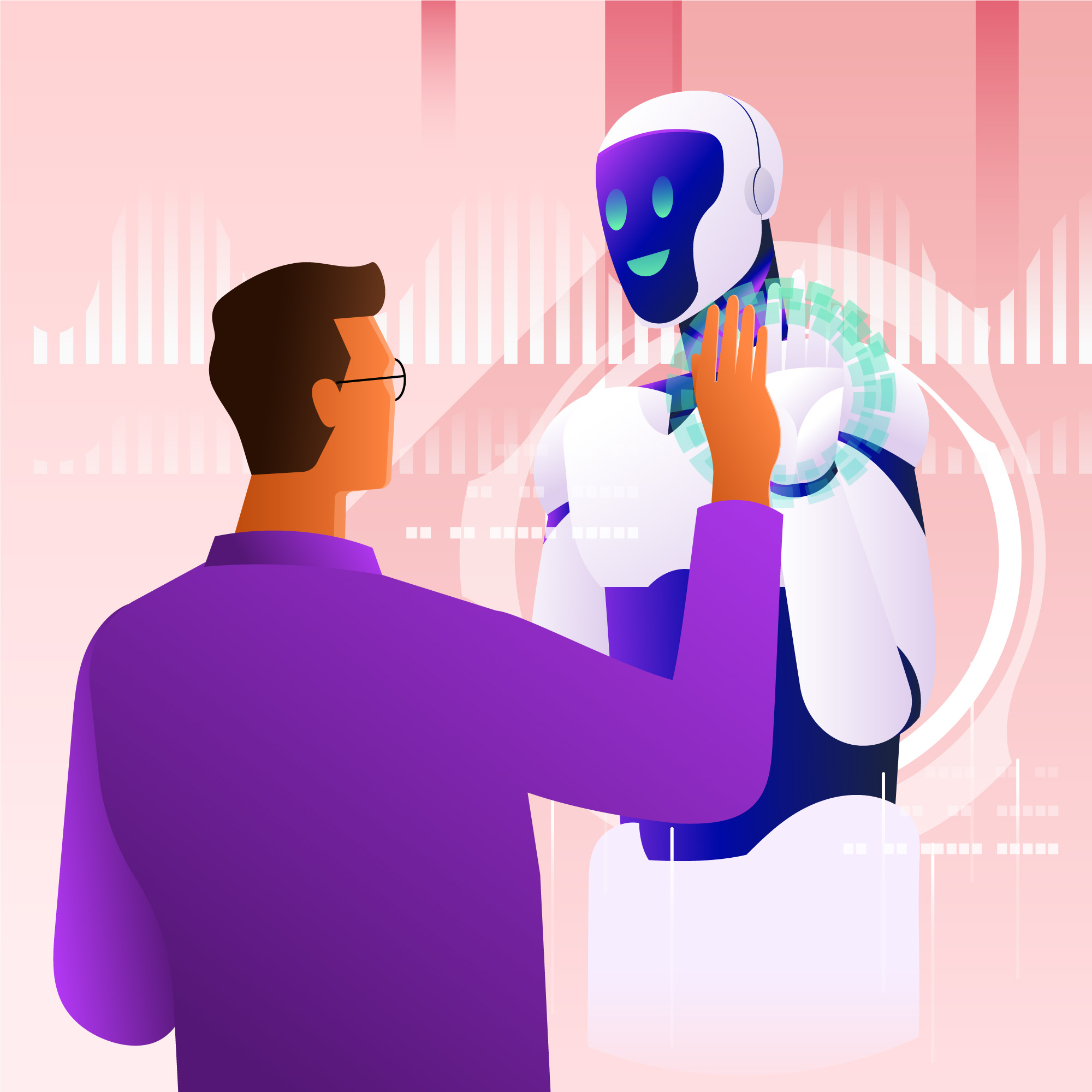
As artificial intelligence (AI) continues to transform industries, outsourcing is experiencing a profound shift. Companies are increasingly integrating AI and automation into their outsourcing models to streamline processes, reduce costs, and enhance efficiency. However, while AI offers numerous benefits, the challenge lies in striking the right balance between automation and human talent. Relying solely on technology or on human input may not yield the best results. This article explores how companies can successfully balance AI with human expertise to create a more efficient, productive, and sustainable outsourcing model.
1. The Role of AI in Outsourcing: Efficiency and Precision
- Automating Repetitive Tasks:
AI and robotic process automation (RPA) are transforming the outsourcing landscape by automating repetitive and mundane tasks such as data entry, document review, and customer service inquiries. By taking over these tasks, AI helps to reduce operational costs and minimizes human error, freeing up outsourced teams to focus on more strategic and creative work. - Enhancing Decision-Making with AI:
AI-powered analytics tools can provide valuable insights by analyzing large data sets and delivering real-time recommendations. These insights help outsourcing providers make better decisions, whether it’s predicting customer behavior, optimizing supply chains, or improving operational efficiency. By leveraging AI for data-driven decision-making, businesses can stay ahead of trends and improve service delivery.
2. Why Human Talent Still Matters in Outsourcing
- Creative and Strategic Thinking:
While AI excels at data processing and automation, human talent remains essential for tasks that require creativity, critical thinking, and problem-solving. For example, strategic decision-making, customer relationship management, and complex problem-solving are areas where humans continue to outperform machines. AI can assist in these tasks by providing data and insights, but it is the human touch that adds context and nuance to decision-making. - Emotional Intelligence and Empathy:
AI may be able to handle routine customer service queries, but it lacks the empathy and emotional intelligence that human agents bring to customer interactions. For situations that require nuanced understanding and empathy, such as dealing with customer complaints or complex issues, human employees remain irreplaceable. Outsourcing strategies should include humans who can build relationships and respond with empathy, alongside AI that can handle routine inquiries.
3. Finding the Right Balance Between Automation and Human Input
- Automation for Efficiency, Humans for Innovation:
The key to achieving the right balance between AI and human talent in outsourcing is knowing when to use each. Businesses should leverage AI for tasks that benefit from automation, such as data analysis, reporting, and operational tasks that do not require human judgment. However, for tasks that involve innovation, creativity, and client relationships, human talent should remain the cornerstone of the outsourcing strategy. - Collaboration, Not Replacement:
Rather than viewing AI as a replacement for human workers, companies should view it as a collaborator. AI can assist human workers by providing real-time data, offering predictive insights, and automating repetitive tasks, allowing human employees to focus on higher-value activities that require complex thinking and personal touch. For example, AI can generate reports, but human employees can interpret the data and strategize on how to act on those insights. - Upgrading Human Talent with AI Tools:
Businesses should provide their outsourcing teams with access to AI-powered tools that can enhance their capabilities. This includes automating administrative tasks, improving data analysis, and optimizing workflows. By integrating AI into everyday operations, human workers can focus on their strengths while AI handles the more repetitive or data-driven tasks.
4. Challenges of Integrating AI into Outsourcing Models
- Ensuring Quality Control:
AI-driven systems can sometimes make mistakes, especially when they encounter new situations or unexpected data. This is why human oversight is essential in any automated outsourcing model. Companies must ensure that there is a process for human quality control to verify the outputs generated by AI and automation systems. Combining AI’s speed and accuracy with human review helps ensure that errors are minimized, and quality is maintained. - Managing the Change:
The transition to a more AI-integrated outsourcing model can be challenging for both businesses and workers. Companies must manage this change carefully to ensure a smooth integration of AI technologies. This involves providing training and reskilling opportunities for outsourced teams to help them adapt to the new technologies, ensuring that employees feel supported in learning how to use AI tools effectively. - Bias in AI Algorithms:
One of the concerns with AI in outsourcing is the potential for bias in the algorithms. AI systems are trained on data, and if that data is biased, the AI will reflect those biases in its outputs. Businesses must take care to ensure that their AI systems are trained on diverse, representative data and that there are safeguards in place to address potential biases.
5. Case Studies: Successful AI and Human Talent Integration
- AI-Enhanced Customer Service:
Many companies are successfully integrating AI-powered chatbots alongside human customer service teams to deliver more efficient support. For example, AI-powered chatbots can handle basic inquiries such as order tracking or FAQs, while human agents handle more complex issues. This balance allows businesses to scale customer support without sacrificing the quality of service. - AI in Recruitment and Talent Acquisition:
In the recruitment process, AI can assist by screening resumes, identifying key skills, and ranking candidates based on their qualifications. However, human recruiters are still responsible for conducting interviews, assessing cultural fit, and making final hiring decisions. AI supports the process by filtering out unqualified candidates, allowing recruiters to focus on the highest-potential candidates.
6. The Future of AI and Human Talent in Outsourcing
- Co-Evolution of AI and Human Workers:
The future of outsourcing will see AI and human workers co-evolving. As AI continues to learn and improve, its role in outsourcing will expand, but human talent will always remain integral to the process. The most successful outsourcing strategies in the future will be those that find a harmonious balance between technology and human expertise. - Skills of the Future:
As AI continues to take over routine tasks, human workers will need to develop new skills that complement AI capabilities. This includes skills in critical thinking, emotional intelligence, creativity, and leadership. By developing these “human” skills, outsourced teams will remain a vital asset to businesses even as AI takes on more automated tasks.
Conclusion: The Human-AI Collaboration Model
The integration of AI into outsourcing models holds significant potential for improving efficiency, reducing costs, and enhancing productivity. However, for optimal results, businesses must strike the right balance between human talent and automation. By automating routine tasks while empowering human workers to focus on creativity, innovation, and relationship-building, companies can build a more efficient and sustainable outsourcing strategy. The key to success will be leveraging AI as a tool to enhance human capabilities, rather than as a replacement for human workers.